Smart Technology Solutions for Modern Spaces: Classrooms, Surveillance, Digital Signage and AV Systems
After more than three decades in the audio-visual and integration business, I can tell you one thing that hasn’t changed even as the technology around it has been transformed almost beyond recognition: buildings only work as well as the systems inside them. A classroom, a warehouse, a retail floor, or a corporate lobby is just an empty shell until the right technology brings it to life , helping people learn, keeping them safe, and communicating with them clearly.
What has changed, dramatically, is how much these systems can now do, and how tightly they’ve become woven into one another. Twenty years ago, surveillance, signage, and AV were three separate conversations with three separate vendors. Today, the smartest spaces treat them as one integrated ecosystem. That shift is exactly where Satin AVS has built its reputation as a Professional Audio Visual company that designs, installs, and supports smart environments across the UAE.
Why “Smart” Spaces Are No Longer Optional
I remember when installing a projector and a couple of speakers counted as a “smart” upgrade. Clients were happy if the sound didn’t feed back and the picture wasn’t blurry. That bar has moved a long way.
Today, a facility manager, school administrator, or business owner is expected to deliver spaces that are connected, secure, and responsive , often on a budget that hasn’t grown at the same pace as expectations. The good news is that the technology has matured to the point where it’s genuinely possible to meet all three goals at once, provided the systems are designed by people who understand how they interact , which is where a genuine Professional Audio Visual company earns its keep.
Smart Classroom Technology: Teaching Built for How Students Actually Learn Now
If there’s one sector where I’ve watched the transformation happen fastest, it’s education. Smart classroom technology isn’t a buzzword anymore , it’s become the baseline expectation from parents, teachers, and students alike.
What a Genuinely Smart Classroom Includes
A well-designed smart classroom technology setup typically brings together:
- Interactive flat panels or smartboards that replace the old whiteboard-and-projector combination, allowing teachers to annotate, share, and save content in real time
- Wireless content sharing, so a teacher or student can cast from a laptop or tablet without hunting for the right cable
- Integrated audio systems that ensure every student , not just the ones in the front row , can hear clearly, which matters more than most people realize for comprehension and attention span
- Lecture capture and hybrid learning tools, letting lessons be recorded or streamed for absent students, or for institutions running blended learning models
The Detail Most Vendors Miss
Here’s something I’ve learned the hard way over the years: the biggest failure point in classroom AV isn’t the technology itself, it’s the interface. Teachers are not IT professionals, and they shouldn’t have to be. If a system takes five steps and a support call to turn on, it will sit unused within a term, no matter how impressive the specs sheet looked in the sales pitch.
The classrooms that actually get used well are the ones designed around simplicity: one-touch start, consistent controls across rooms, and reliable connectivity that doesn’t need troubleshooting every Monday morning. That’s the standard behind every smart classroom technology installation Satin AVS designs.
Security Surveillance Systems: Protection That Works Quietly in the Background
Surveillance has gone through arguably the biggest technical leap of any category discussed here. Security surveillance systems used to mean grainy analog footage reviewed after the fact , usually after something had already gone wrong. Now, surveillance is proactive, not just reactive.
What Modern Surveillance Actually Looks Like
Today’s security surveillance systems typically include:
- High-definition IP cameras: with far superior night vision and detail capture than analog systems ever offered
- AI-assisted analytics: including motion detection that can distinguish between a person, a vehicle, and a stray cat , cutting down false alerts significantly
- Remote monitoring: so a business owner or facilities manager can check in on a property from anywhere, on any device
- Access control integration: tying door entry systems directly into the surveillance network for a single, coherent security picture rather than a patchwork of disconnected tools
A Lesson From the Field
I’ve seen too many organizations buy cameras first and think about the network second , and that’s backwards. High-resolution surveillance footage generates enormous amounts of data, and if the network infrastructure, storage, and bandwidth aren’t planned properly from the start, the system either chokes under its own footage or ends up quietly recording at a lower quality than the client paid for. Properly designed security surveillance systems start with the infrastructure conversation, not the camera catalog.
Digital Signage Solutions: Communication That Actually Gets Noticed
Digital signage solutions are, in my experience, one of the most underrated tools in a business’s communication arsenal. Static posters and printed banners have a shelf life measured in weeks; digital signage can be updated in seconds and speaks to an audience that has simply stopped noticing anything that doesn’t move.
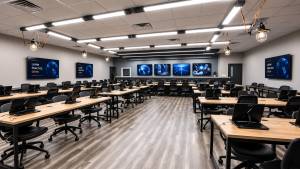
Where Digital Signage Delivers Real Value
Digital signage solutions show up differently depending on the environment:
- Retail and hospitality: dynamic promotions, wayfinding, and menu boards that can change by time of day
- Corporate environments: meeting room availability screens, internal communications, and visitor welcome displays
- Education and healthcare: announcements, schedules, and wayfinding that reduce foot traffic to the front desk
- Public and transit spaces: real-time information that keeps people informed without staff intervention
Content Management Is the Real Differentiator
Any integrator can hang a screen on a wall. What separates a good digital signage solutions deployment from a forgettable one is the content management system behind it. A CMS that’s clunky or requires technical know-how to update will end up displaying the same slide for six months because nobody wants to deal with it. The systems worth investing in are the ones a marketing coordinator or receptionist can update from a phone in under a minute.
Professional AV Systems: The Backbone That Ties It All Together
Everything above , classrooms, surveillance, signage , ultimately depends on solid Professional Audio Visual design and integration underneath it. This is the layer most people never think about, precisely because when it’s done well, it’s invisible.
What a genuine Professional Audio Visual company delivers typically spans:
- Conference and meeting room technology, including video conferencing that actually works the first time, every time
- Auditorium and event space audio, engineered for clarity across the whole room, not just near the speakers
- Centralized control systems, allowing lighting, audio, video, and climate to be managed from a single interface
- Structured cabling and network design, the unglamorous foundation that determines whether everything above performs reliably for the next ten years
Why Integration Matters More Than Any Single System
If I had to distill three and a half decades of lessons into one piece of advice, it’s this: the value isn’t in any single system, it’s in how well they talk to each other.
A smart classroom technology setup with excellent AV but no proper network backbone will lag and drop connections. Security surveillance systems with great cameras but no integration into access control leave security gaps. Digital signage solutions that aren’t tied into a broader communication strategy become digital wallpaper nobody looks at twice.
The organizations that get the most value from their technology investment are the ones that plan holistically from day one , which is exactly the approach a trusted Professional Audio Visual company like Satin AVS takes with every project, whether it’s a single classroom or a full-building rollout.
Final Thoughts
Technology in physical spaces has moved from “nice to have” to genuinely mission-critical, whether that’s a school trying to keep pace with digital learning, a facility protecting its people and assets, or a business trying to communicate more effectively with the people who walk through its doors. The common thread across all of it is thoughtful integration , hardware and software chosen and configured to work as one system, not a collection of separate boxes.
That’s the work Satin AVS does every day across the UAE, and it’s the standard behind every smart classroom technology installation, security surveillance system, digital signage solution, and AV system we design.
FAQs
1. What’s the difference between smart classroom technology and a regular classroom with a projector?
A regular classroom setup is usually a single device, a projector or a screen. True smart classroom technology integrates display, audio, wireless sharing, and often lecture capture into one connected system that’s simple for teachers to operate and consistent across every room in the school.
2. How do AI-powered security surveillance systems reduce false alarms?
Modern security surveillance systems use analytics that can differentiate between people, vehicles, and other movement (like trees or animals), so alerts are triggered only for genuinely relevant activity rather than every motion the camera detects.
3. Can digital signage content be updated remotely?
Yes. Well-implemented digital signage solutions use cloud-based content management, meaning screens across multiple locations can be updated instantly from a single dashboard, without anyone needing physical access to the display.
4. Do security surveillance systems need special network infrastructure?
Generally, yes. High-definition IP cameras generate substantial data, so bandwidth, storage capacity, and network design need to be planned around the system from the outset rather than retrofitted afterward.
5. Is it worth integrating AV, surveillance, and signage systems together, or should they be separate?
Integration is almost always worth it. A unified system reduces long-term maintenance complexity, improves reliability, and gives facility managers a single point of control instead of juggling multiple disconnected platforms.